Can Reduced Sodium Influence the Anion Gap?
What the Anion Gap Measures
The anion gap is a derived value that allows clinicians to evaluate electrolytes and general acid-base balance. It is not directly checked on a blood test; instead, it is obtained from routine lab values, especially sodium, chloride, and bicarbonate. Because these numbers are part of the same chemistry panel, changes in one can affect the final result and its clinical significance.
At a basic level, the anion gap reflects the difference between the main positively charged and negatively charged ions in the blood. This makes it a useful diagnostic clue when reviewing an unexpected result on a blood test. It can help identify whether a patient may have a hidden acid-base problem, such as metabolic acidosis, or whether the issue is better explained by a change in serum levels of proteins or a possible measurement error.
Most often, clinicians look at sodium, chloride, and bicarbonate together on the basic metabolic panel. These values are the backbone of many routine lab reviews. If sodium is low, the anion gap can look different even when the underlying chemistry has not changed much. That is why understanding the formula matters before drawing conclusions about the normal range or deciding whether an abnormal value is meaningful.
How an Anion Gap Calculator Operates
An Anion Gap Calculator is a useful utility that does the same analysis clinicians use when checking lab values. It brings together the available serum bicarbonate, sodium, and chloride values to calculate the gap. Some calculators also ask for albumin or serum albumin because low protein levels can make the result look falsely low and may require albumin correction.
The calculator is useful because it turns raw lab values into an reading aid. Rather than looking at sodium or chloride alone, it assists show how the numbers fit together. This improves result accuracy when evaluating an unexpected result and gives a better picture of the patient’s electrolyte balance.
In practical use, the calculator supports clinicians in distinguishing whether the pattern indicates a high anion gap or a low anion gap. A high value may suggest excess unmeasured acids, while a low value may suggest low albumin, a lab artifact, or less common causes such as paraproteins. The calculator does not replace judgment, but it supports faster, more structured lab interpretation.
Because the anion gap is calculated from routine chemistry data, even small shifts in sodium, chloride, or bicarbonate can change the outcome. That is why the calculator should always be used with the rest of the panel and the patient’s overall picture, not in isolation.
Can Low Sodium Change the Anion Gap?
Yes, hyponatremia can affect the anion gap, but the relationship is often nuanced. Since sodium is part of the formula, a decreased sodium value can alter the calculated result. However, a low sodium level does not automatically mean the anion gap is truly abnormal. The result may reflect the formula itself, the underlying cause of the sodium change, or a measurement error.
From a chemistry standpoint, the body maintains electroneutrality, meaning total positive and negative charges stay balanced. The anion gap is a way of measuring the portion of that balance not directly captured by the measured ions. If sodium falls, the calculation can shift, but whether that shift matters depends on the full lab pattern and clinical context.
For example, if sodium is low because of fluid imbalance or a dilutional state, the gap may appear lower without a true change in acid-base status. If chloride or bicarbonate also changes, the effect may be more obvious. This is why clinicians should not interpret sodium in isolation. They use the entire panel to decide whether the result reflects a real disorder or a misleading number.
Low sodium can also coexist with conditions that cause a truly abnormal anion gap. In that setting, the sodium change is not the primary driver of the gap, but it may complicate the lab interpretation. The question is not simply whether sodium is low, but whether the low sodium is changing the calculation enough to obscure the underlying cause.
Typical Reasons for Hyponatremia and an Unusual Anion Gap
Hyponatremia and an abnormal anion gap often appear together because the same illness can influence fluid balance, kidney handling of electrolytes, and acid production. One common reason is dehydration. Even though dehydration is often associated with concentrated labs, severe fluid loss can alter sodium and other values in ways that make interpretation complicated, especially if bicarbonate also changes.
Kidney disease is another significant cause. When the kidneys cannot remove acids efficiently, the body may develop metabolic acidosis. In that setting, the anion gap may rise because unmeasured acids collect. Kidney dysfunction can also affect sodium regulation, making the lab pattern more complex.
SIADH, or syndrome of inappropriate antidiuretic hormone secretion, is a classic cause of hyponatremia. In SIADH, water retention dilutes sodium, and the anion gap may look abnormal depending on the rest of the chemistry panel. The anion gap itself may not be the main issue, but it can still help detect whether another acid-base disorder is present.
Some patients with low sodium and abnormal acid-base findings have a combined problem. For example:
- Low sodium with low bicarbonate may suggest a metabolic problem that needs closer review.
- Hyponatremia with elevated chloride may lower the anion gap or point away from a high-gap disorder.
- Kidney disease can contribute to both sodium imbalance and metabolic acidosis.
The key point is that low sodium may be a clue, not the diagnosis itself. A close review of electrolytes, serum bicarbonate, and other lab values is needed to determine the real diagnostic clue behind the pattern.
Reduced Anion Gap vs Increased Anion Gap
A reduced anion gap and a high anion gap suggest very different scenarios. A high anion gap usually suggests excess acids in the blood, while a low anion gap often reflects decreased albumin, a lab issue, or rare disorders. That difference matters because the treatment approach depends on the direction of the change.
Albumin is one of the main reasons a low anion gap can occur. Because albumin carries a negative charge, low albumin can decrease the gap even when sodium, chloride, and bicarbonate are otherwise stable. This is why albumin correction is often needed. A corrected anion gap may reveal that the result is not as abnormal than it first appeared.
By contrast, a high anion gap often appears in conditions such as lactic acidosis and ketoacidosis. In lactic acidosis, the body retains lactate due to poor oxygen delivery or impaired metabolism. In ketoacidosis, ketones build up when the body uses fat for fuel. Both conditions can produce a high anion gap metabolic pattern that requires prompt attention.
Paraproteinemia can also lead to a low anion gap. Abnormal proteins in the blood may change the charge balance enough to affect the calculation. This is less common than low albumin, but it is clinically important when the result does not fit the rest of the labs.
Thinking in terms of low versus high anion gap helps refine the differential. It also keeps the clinician focused on the reference range, the surrounding chemistry, and the true clinical significance of the result rather than the number alone.
If a Reduced Anion Gap Is a Testing Artifact
Not all reduced anion gap reflects a medical problem. Sometimes the result is a laboratory error or another laboratory artifact. That is why result review should consider the possibility of a sample issue, especially when the number does not fit the patient’s symptoms or other findings.
Among the most significant artifacts is pseudohyponatremia. Under these conditions, the measured sodium may appear lower than it really is because of abnormal sample composition, such as extreme protein or lipid levels. If sodium is falsely low, the calculated anion gap may also appear misleading. That may lead to a confusing pattern unless the sample is repeated or checked with a different method.
A different typical approach is retesting. When the finding is unusual, repeating the blood test helps determine whether the issue is actual or due to random variation, specimen collection errors, or instrument-related problems. That is especially important when the lab pattern is not consistent with the patient’s status.
If sodium, chloride, or bicarbonate do not fit the clinical scenario, first check whether the value is repeatable before thinking a real acid-base imbalance.
A decreased anion gap due to a lab artifact is frequently corrected when the sample is retested. That is why clinicians carefully monitor measurement error and how the specimen was collected, processed, and tested.
How Providers Read the Result
Doctors rarely evaluate the anion gap alone. They often check the basic metabolic panel at first, then use an arterial blood gas if necessary to understand the acid-base picture more fully. These tests together offer a more complete view of the patient’s chemistry and respiratory function.
Assessment often starts with checking sodium, chloride, bicarbonate, and serum albumin. If albumin is low, the anion gap may need albumin correction before proper interpretation. This is essential because a corrected anion gap may alter the clinical picture from abnormal to near normal.
The next stage is considering the result into clinical context. Is the patient unwell, dehydrated, confused, short of breath, or displaying signs of kidney dysfunction? Are there symptoms that suggest lactic acidosis or ketoacidosis? Does the pattern fit SIADH, or is there evidence of paraproteinemia? These points help determine whether the number represents a true disorder or a transient lab finding.
Doctors also review the result with prior labs when available. A sudden change may be more concerning than a mildly abnormal value that has remained stable. This strategy helps identify the underlying cause and supports better decision-making around further testing, treatment, or observation.
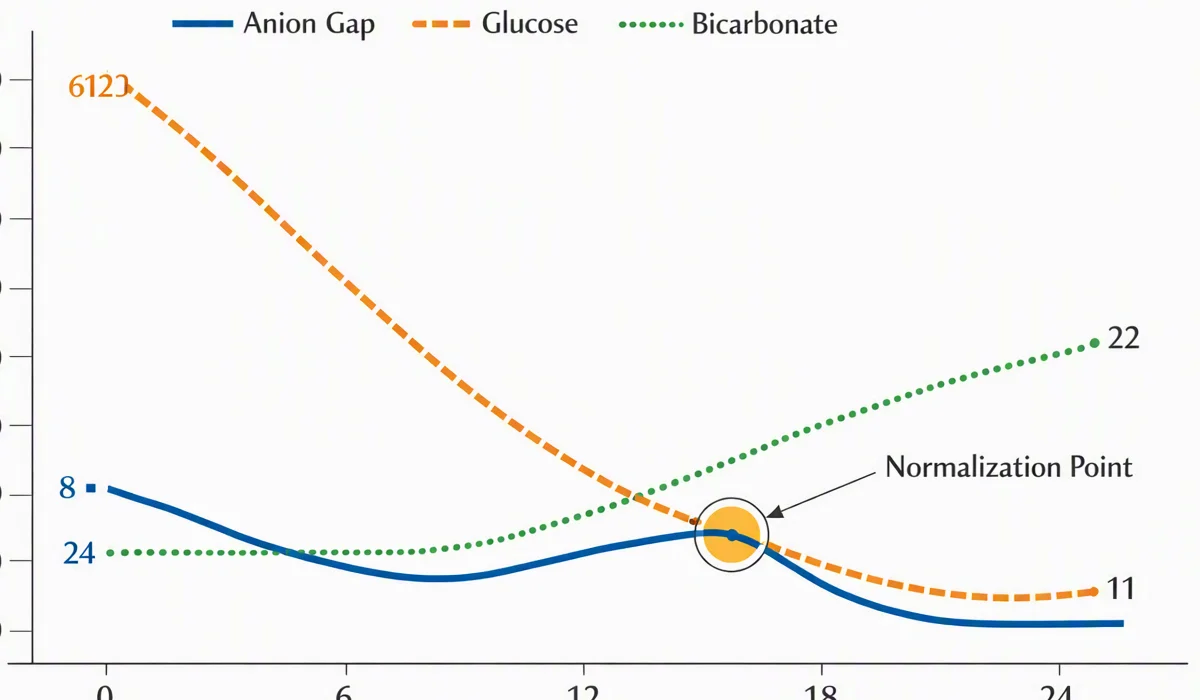
In short, what a high anion gap means the anion gap is a calculated value, but its interpretation is a clinical process. The best interpretation guide pairs the calculator result with the patient’s symptoms, lab trend, and possible diagnosis.
When You Should Seek Medical Evaluation
Low sodium and an abnormal anion gap call for medical evaluation when they are associated with concerning symptoms or when the result is severe. Mild changes may be monitored in some cases, but significant abnormalities can indicate a serious disorder that should be addressed quickly.
Special concern comes with severe hyponatremia. If sodium is very low, the brain can be affected, leading to confusion, headache, nausea, weakness, or more serious neurologic symptoms. These findings should not be ignored, especially if the patient also has an abnormal anion gap or signs of metabolic illness.
Seek urgent emergency care if abnormal labs occur along with fainting, seizures, severe confusion, trouble breathing, chest pain, or marked decline in alertness. These may signal a life-threatening electrolyte or acid-base disturbance.
A low anion gap in the absence of symptoms can still require follow-up, especially if the result is persistent or paired with low albumin, kidney disease, or suspected paraproteinemia. Even when the issue turns out to be a lab artifact, confirmation matters because it prevents missed diagnoses and avoids unnecessary treatment.
The most prudent approach is to treat the Anion Gap Calculator as a guide, not a diagnosis on its own. If the result is unexpected, repeat the labs, review the basic metabolic panel, and discuss the findings with a clinician who can interpret them in context.
FAQ
Can low sodium lower the anion gap?
Yes, it can. Because sodium contributes to the anion gap equation, low sodium can lower the calculated value. However, the result may also reflect the underlying condition causing the sodium change or a lab artifact, so it should be interpreted with chloride, bicarbonate, and serum albumin.
Does hyponatremia cause a low anion gap?
A low sodium level can contribute to a low anion gap, but it does not always cause one by itself. The bigger question is why the sodium is low and whether other values, such as chloride and bicarbonate, support a true acid-base disorder.
What is the most common cause of a low anion gap?
Reduced albumin levels is one of the most common causes of a low anion gap. For this reason albumin correction is crucial. After that, lab artifact and measurement issues are also typical explanations, especially when the result does not align with the clinical picture.
Can a low anion gap be due to a lab error?
Yes, it can. A low anion gap can result from testing error, specimen issue, or pseudohyponatremia. Repeat testing is often the most appropriate first step when the value is surprising or inconsistent with other lab findings.
When should I worry about abnormal sodium and anion gap results?
You should seek medical evaluation if abnormal sodium and anion gap results occur with symptoms such as confusion, severe weakness, vomiting, shortness of breath, or signs of severe hyponatremia. Emergency care is necessary if there are neurologic symptoms or a rapidly worsening condition.